

Key Takeaways
- Hex bolts provide high-torque reliability for structural engineering applications.
- Nyloc nuts prevent loosening from vibration in aerospace and automotive assemblies.
- Stainless steel fasteners provide essential corrosion resistance in harsh environments.
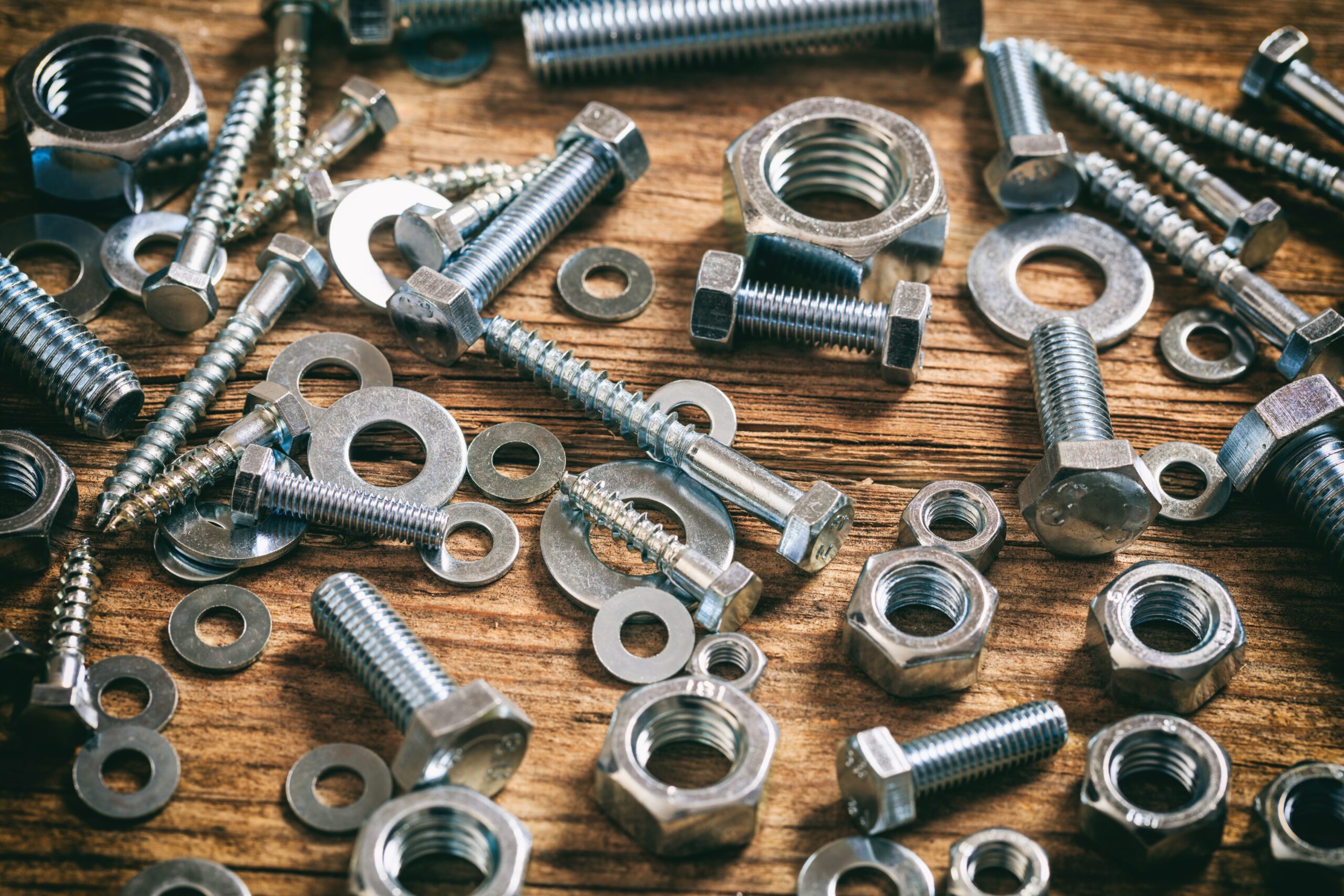
There are few parts of a build more important yet more overlooked than the humble nut and bolt. Choosing the correct fastener dictates whether an assembly is safe and secure or results in a costly failure. Messing up at home often just leads to a second trip to the hardware store, but larger operations must source high-volume orders in advance that meet strict ISO-certified quality standards.
Selecting the wrong fastener can lead to stripped heads, loose parts, or rapid corrosion. These failures cause production delays and increase replacement costs. Understanding the precise applications for different fasteners can help reduce procurement time, maximize savings, and enhance on-site efficiency.
What Are the Applications for Hex Bolts vs Allen Bolts?
Hex bolts are the everyday workhorses of the fastener industry. Their six-sided heads offer a confident grip for structural steelwork and heavy machinery assembly. Hex head cap screws feature tight tolerances, making them appropriate for demanding applications.

Socket head cap screws, commonly known as Allen bolts, excel when space is limited. Their recessed drive provides a compact, flush finish in precision machinery. Choose hex bolts if high-torque tightening matters more than space constraints. Choose Allen bolts for a neat finish in tight clearances.
Special Purpose Bolts for Specific Tasks
Standard fasteners cover basic needs, but specialized tasks require specific designs. Eye bolts feature a looped head designed for hoisting and anchoring. However, the exact load rating must be verified before purchasing eye bolts for industrial rigging. Wing bolts allow for tool-free adjustments, making them ideal for panels or jigs that need frequent access.
Coach bolts, also known as carriage bolts, have a domed head and a square neck that prevents rotation. They provide a tamper-resistant finish for timber structures. Shear bolts act as a sacrificial safety mechanism. They snap at a predetermined torque limit to protect expensive gear in agricultural or industrial systems from further damage.
Comparing Nyloc, Security, and Barrel Nuts
High-pressure environments require locking variations. Nyloc nuts feature a nylon collar that tightly grips the bolt thread. This makes them the best choice for automotive and aerospace assemblies where vibration causes standard nuts to loosen.
Security nuts require specialized tools for installation and removal, deterring tampering in public infrastructure projects. Barrel nuts feature internal threading and a smooth exterior. They sit flush within a pre-drilled hole, making them excellent choices for furniture assembly and confined structural spaces.
The Impact of Bolt Grades and Materials on Corrosion Resistance
Engineers must match metric threads to metric threads and imperial threads to imperial threads. A steel grade indicates strength, meaning a higher grade delivers a higher load capacity. Material selection directly affects how well a fastener withstands its environment.
Carbon steel is strong and cost-effective for indoor structural applications. Stainless steel fasteners contain chromium, providing excellent corrosion resistance for marine and outdoor environments. Exotic alloys such as titanium and Inconel serve high-performance aerospace needs.
Custom Fasteners and When to Call an Expert
Off-the-shelf fasteners cover the vast majority of procurement needs. However, aerospace, marine, and specialized industrial projects often require bespoke bolts or nuts with precise dimensions and thread forms. If the project involves unusual loads or extreme demands, request technical support from the supplier. A reliable partner can produce custom parts to suit your exact specifications.
(Note: AI assisted in summarizing the key points for this story.)